

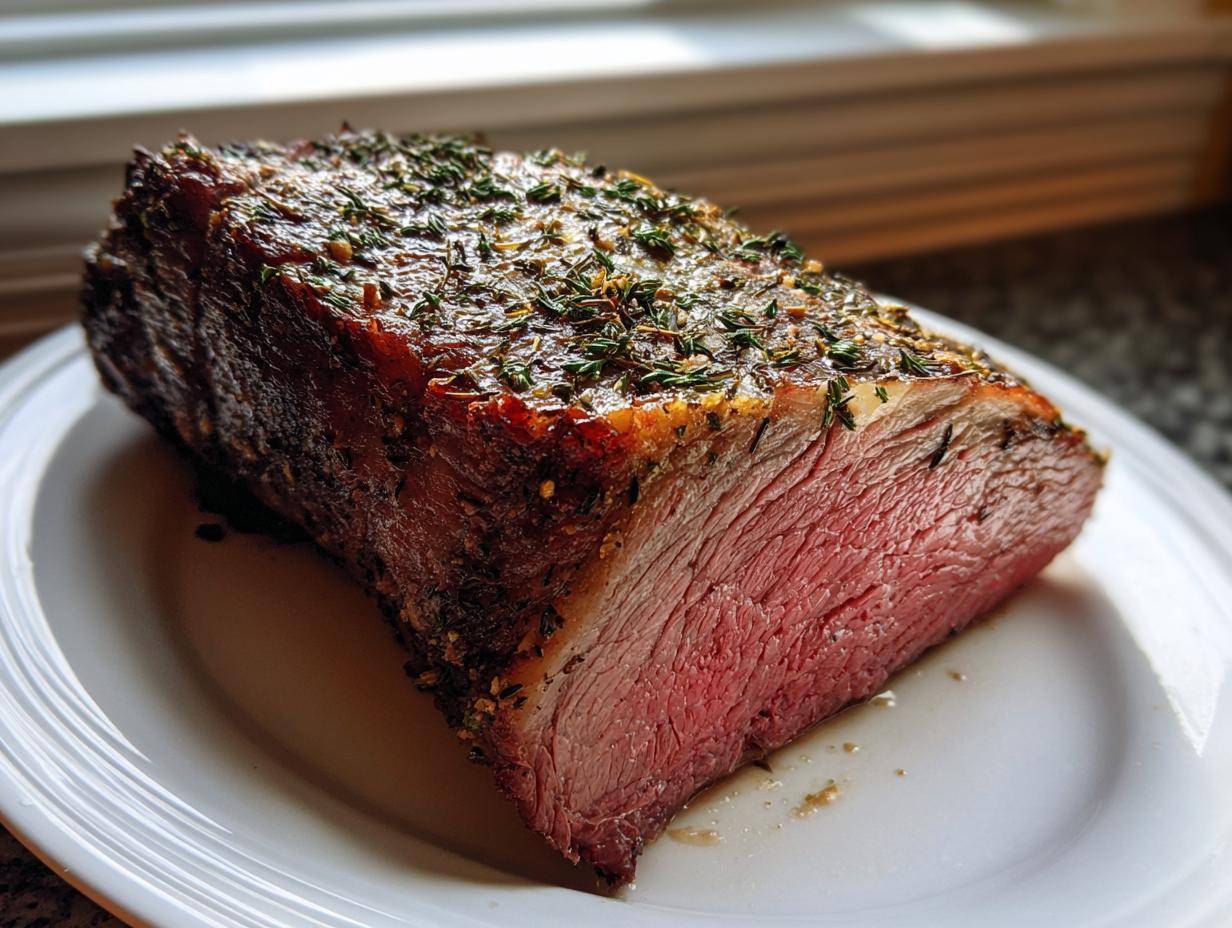
You know, some meals just feel momentous, don’t they? When that big roast hits the table, suddenly everything—Christmas, anniversaries, just surviving a long week—feels special. That’s the power of a beautiful rib roast. Back home in my Midwest kitchen, making the centerpiece was always done with such care, and I learned early on that fuss doesn’t equal flavor; devotion does. That’s why I developed this tried-and-true oven method for the perfect Herb-Crusted Prime Rib. It’s reliable, it’s deeply flavorful, and honestly, it makes me feel connected right back to my grandmother’s apron strings every single time I pull it out of the oven. You can learn more about this philosophy over at my About page. Trust me, this is the roast you want when you need something truly impressive.
- Why This Herb-Crusted Rib Roast is Your New Holiday Standard (E-E-A-T)
- Gathering Ingredients for Your Standing Rib Roast
- How to Cook Prime Rib: Preparation Steps for the Perfect Rib Roast
- The Oven Roasted Beef Roast Method: Temperature Guide for Rib Roast
- Serving Suggestions for Your Festive Beef Dinner
- Storage and Reheating Instructions for Leftover Rib Roast
- Frequently Asked Questions About the Prime Rib Roast Recipe
- Estimated Nutritional Data for This Rib Roast Preparation
- Share Your Christmas Dinner Centerpiece Success
Why This Herb-Crusted Rib Roast is Your New Holiday Standard (E-E-A-T)
I know you worry about serving a roast that comes out looking grand but tasting dry. Please don’t! This method cuts out all the guesswork that makes people nervous about making a standing rib roast. I promise it gives you that impressive color and texture.
- It uses a high-heat blast to set that flavorful crust quickly.
- Then, we bring the temperature way down so the inside cooks gently.
- The whole process lets you focus on getting that temperature perfect.
If you want to see how I use temperature control for my roast chicken too, check out the tips here.
Achieving a Juicy Prime Rib Every Time
Tenderness isn’t luck, it’s science we use at home! That trick of starting super hot—you might have heard people call it the 500-degree rule—sears the outside beautifully. The real secret, though, is letting that roast rest afterward. That rest lets the juices settle back into the meat instead of spilling all over your cutting board. It keeps your prime rib melt-in-your-mouth soft!
Gathering Ingredients for Your Standing Rib Roast
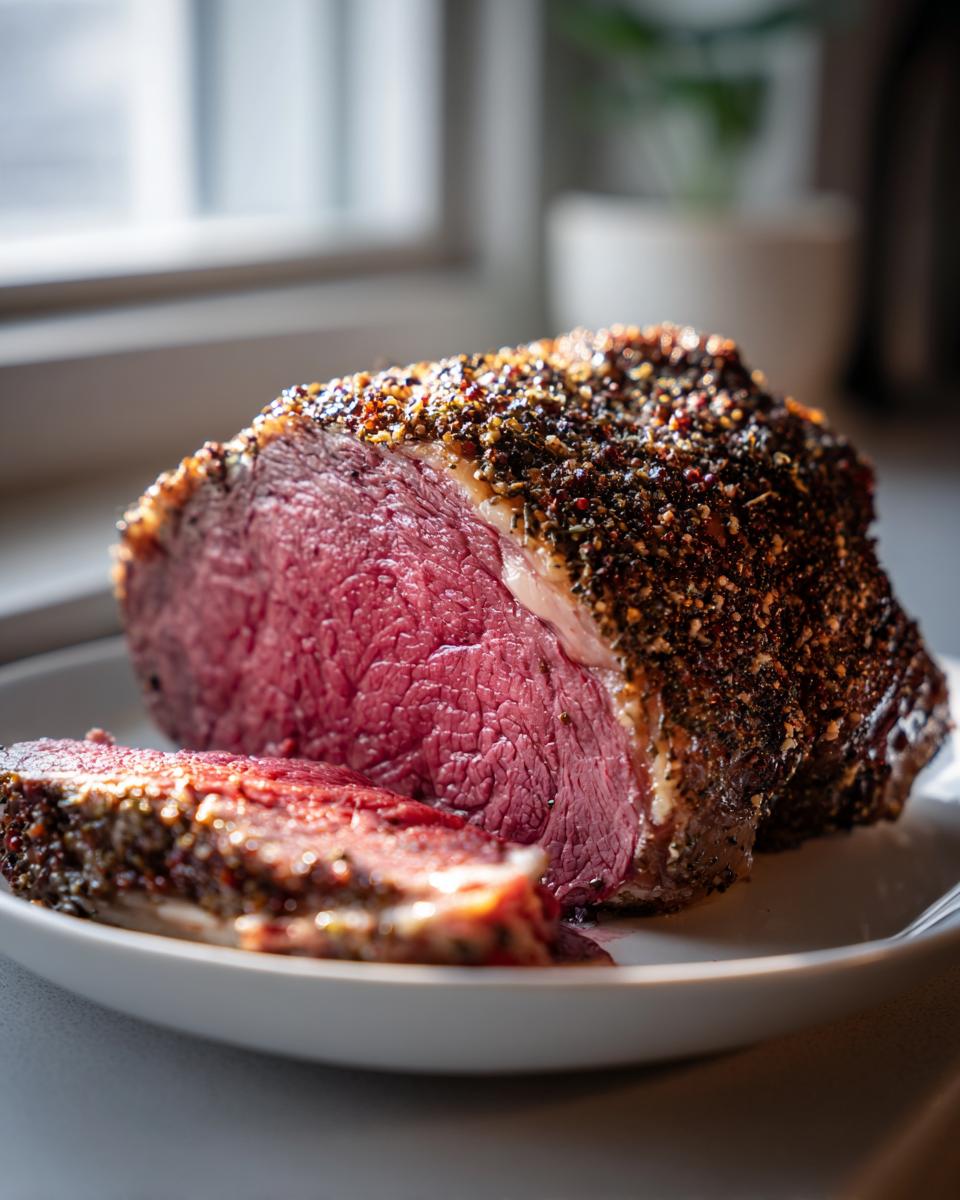
Okay, let’s talk about what you need to make this happen. Remember, for show-stopping food like this, using quality items really pays off! Don’t skimp here; this magnificent rib roast deserves the best, and frankly, so do you.
You’ll need a good, generous cut of beef—I always buy bone-in because those bones help flavor the meat from below, but I know it works beautifully without them too. Then we need the simple flavor crew: coarse salt, fresh pepper, thyme, rosemary, garlic powder for the rub, and then the wet paste made from olive oil, Dijon mustard, and fresh minced garlic.
If you’re planning your sides, you absolutely must check out my recipe for the creamiest garlic potatoes; they are the perfect partner! You can find that right here.
Ingredient Notes and Substitutions for Your Rib Roast
When you’re at the butcher, ask for a quality cut, whether it’s bone-in or you opt for a boneless ribeye roast. That high-quality beef is essential because we aren’t cooking it for hours; we want that incredible natural flavor to shine through the herbs. For the dried herbs, please use ones that still smell punchy! Old herbs just taste like dust, and we want robust flavor on this tender roast beef. No funny business with artificial spices here, promise!
How to Cook Prime Rib: Preparation Steps for the Perfect Rib Roast
Alright, we have our ingredients standing by, looking magnificent. Now for the hands-on part! First things first: take that beautiful rib roast out of the cold! You absolutely must let it sit on the counter for two or three hours. I know it feels like you’re tempting fate leaving raw meat out, but tempering is non-negotiable for even cooking. If it starts cold in the oven, the outside will overcook waiting for the center to catch up.
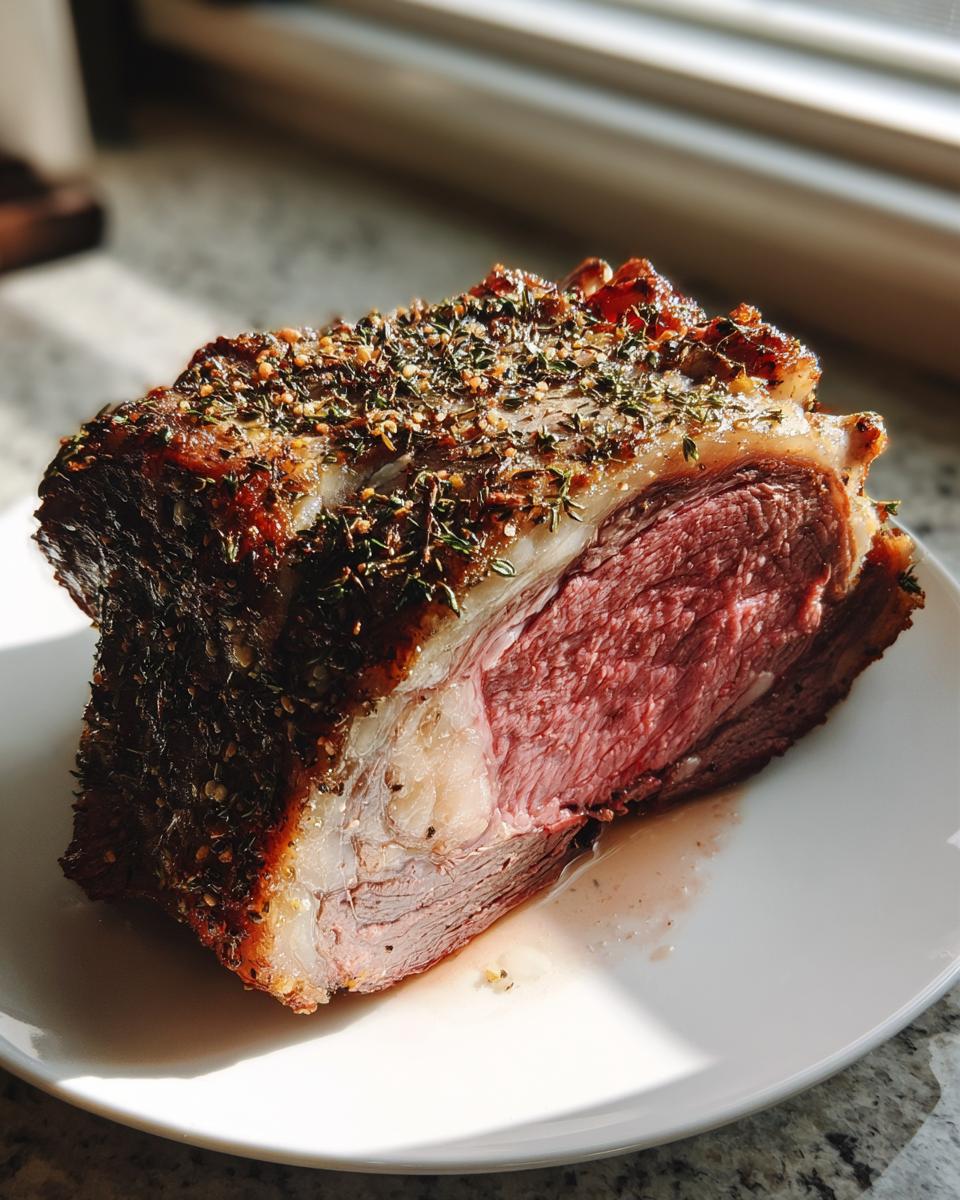
While that’s happening, mix up your dry herb blend until it’s fragrant—this is where that incredible crust starts. Then, whisk together the mustard, oil, and minced garlic into that lovely paste. Now for my absolute favorite tip, the one that makes or breaks that gorgeous outer layer: Pat the entire surface of the roast completely dry using paper towels. I mean bone-dry! Moisture creates steam, and steam equals a soggy crust, which we absolutely hate. Press that paste on everywhere, then really coat it generously with your glorious herb rub. It’s ready for its big debut!
If you need something sweet to balance out all this incredible savory flavor, you should definitely see my caramel sauce recipe. It’s surprisingly simple!
The Oven Roasted Beef Roast Method: Temperature Guide for Rib Roast
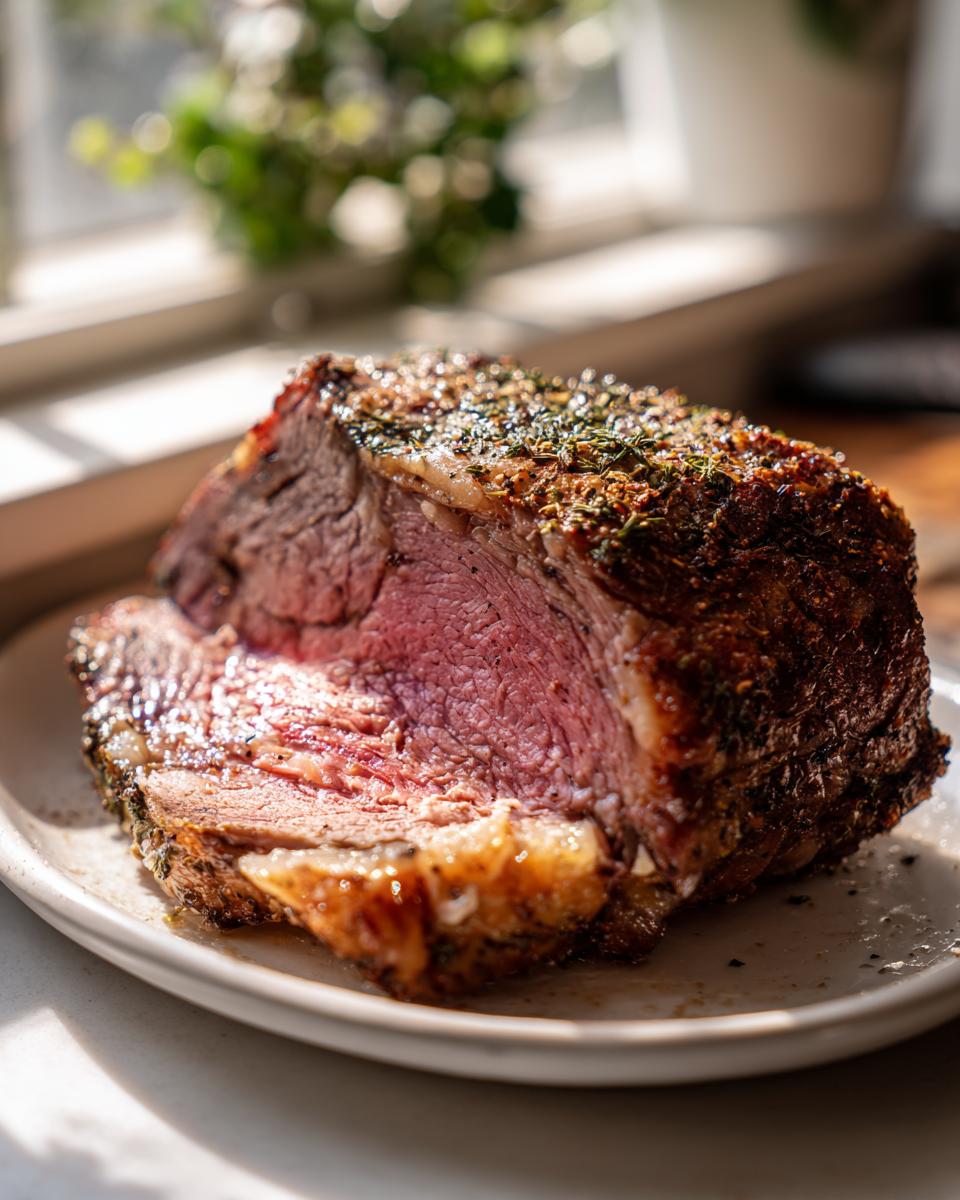
This is where the magic happens, but remember, your oven temperature does most of the heavy lifting! First, crank that oven up to a blazing 500 degrees Fahrenheit. We put the roast in fat-side up and let it sear for just 15 minutes per pound of meat. This sets that beautiful herb crust we worked so hard on and gives the exterior a gorgeous brown color. Don’t peek too much, though!
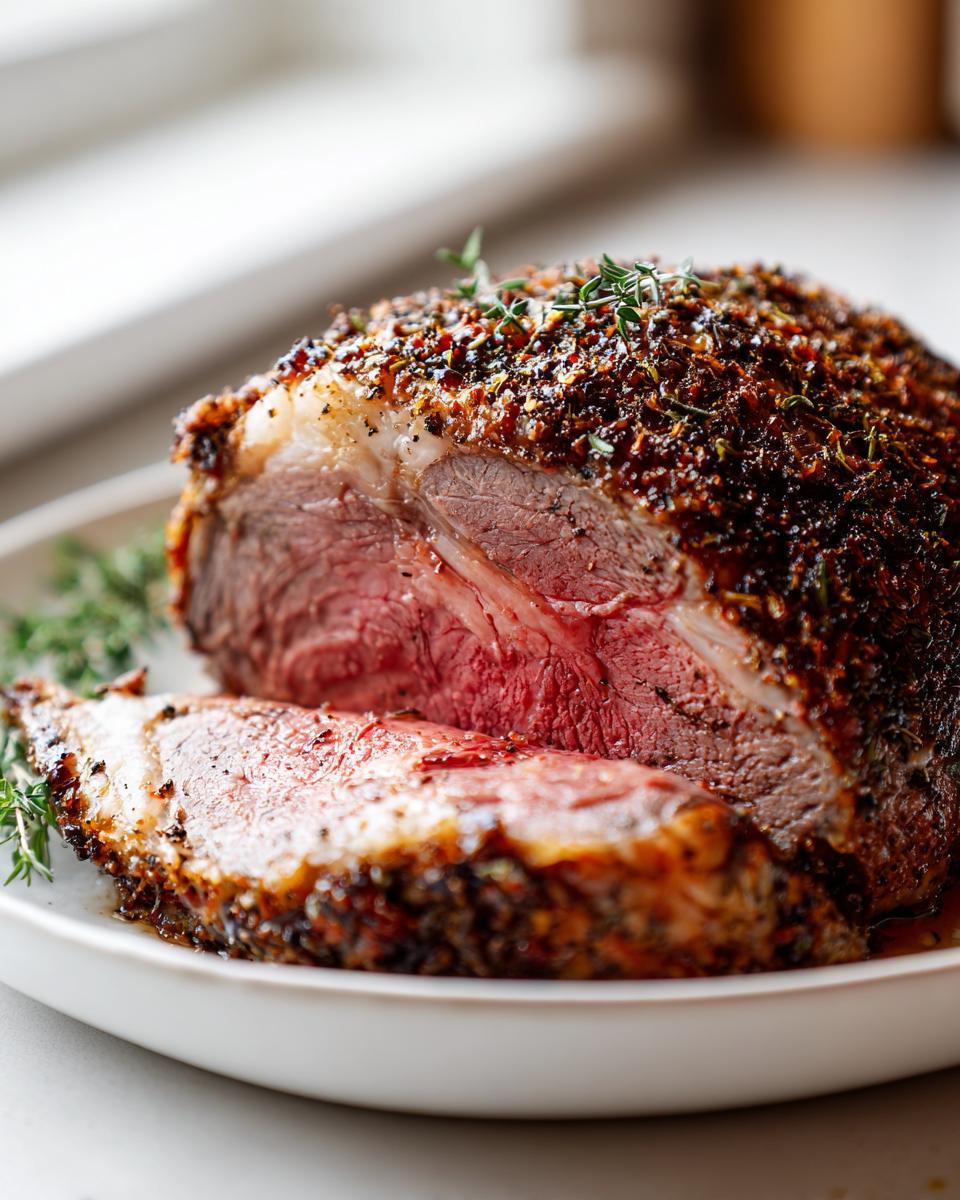
Once that high-heat time is up,—and this is key—drop that temperature down to 325 degrees Fahrenheit without even opening the door while you change the setting if you can. Now, we roast low and slow until we hit that perfect internal temperature. You absolutely need a reliable meat thermometer inserted deep into the thickest part, avoiding that bone underneath. We are aiming for 125 to 130 degrees Fahrenheit for medium-rare. Seriously, trust the thermometer more than the clock here; that’s how you get a spectacularly juicy prime rib.
If you want to peek ahead and see how I manage temperatures for my honey-garlic pork tenderloin, you can check my tips here. For further deep dives based on different methods, I always respect the science over at Serious Eats; you can see their thoughts on the perfect prime rib method.
Crucial Resting Time for Your Herb Crusted Rib Roast
When you pull that big beauty out, the temptation is real: slice it immediately! Don’t do it! That roast is still cooking internally; we call that carryover cooking. If you cut it now, all those wonderful juices—which have been pushed to the center by the heat—will rush out onto your board. Tent it loosely with foil and let it chill out for a solid 20 minutes minimum. This is what guarantees that unbelievably tender roast beef. It’s worth the wait, I promise!
Serving Suggestions for Your Festive Beef Dinner
Now that you have the most tender, perfectly seasoned rib roast, we have to talk about what goes next to it on that platter! Honestly, a roast this rich hardly asks for anything, but we always provide the classics, right? First things first: grab those drippings left in your roasting pan and make a quick, simple au jus—it’s so easy, you’ll never go back to the jarred stuff. Trust me on this!
For side dishes, you can’t go wrong with creamy mashed potatoes, Yorkshire puddings if you’re feeling fancy, or maybe something slightly green to cut through the richness, like creamed spinach or roasted asparagus spears. If you want to make a traditional stuffing to go alongside, I have the recipe for my classic homemade Thanksgiving stuffing recipe that pairs wonderfully with any holiday roast.
Storage and Reheating Instructions for Leftover Rib Roast
Wow, you had leftovers? That means everyone loved the rib roast! Store any thinly sliced meat tightly wrapped in plastic wrap, and then maybe foil again, in the fridge for up to four days. When you want to reheat those precious slices, please skip the microwave—it turns good beef into dry leather so fast.
Your best bet is either reheating slices gently in a low-temperature oven (around 300 degrees) or, my favorite trick, slicing them thinly and quickly reheating them in the pan drippings you saved earlier. That’s how you keep that leftover beef unbelievably juicy! For other slow-cooked favorite beef recipes, you should check out my slow cooker pot roast for next time.
Frequently Asked Questions About the Prime Rib Roast Recipe
I always get so many questions after people make this big centerpiece dish for the first time! It’s natural to wonder about size adjustments or terminology when dealing with such a beautiful piece of meat. Here are a few things people often ask me about this prime rib roast recipe.
Can I use the 500-degree method for a smaller Ribeye Roast Recipe?
You certainly can! That high-heat sear works perfectly well on a smaller ribeye roast recipe too, maybe just for a quick 10 or 12 minutes to get that crust locked in before switching down to 325. You’re building flavor foundation, not cooking the whole thing in that initial blast. It’s very adaptable, which I love!
What is the difference between a Standing Rib Roast and Prime Rib?
This confuses so many folks! Honestly, for all intents and purposes in the home kitchen, they are the same thing. A standing rib roast just refers to the cut of beef still attached to the rib bones, and Prime Rib is generally the term used for that exact same cut when cooked. It’s just nomenclature, darling; the reward is the same delicious, tender roast beef!
How do I ensure my Tender Roast Beef stays moist if I overcook it slightly?
Oh, we’ve all accidentally nudged the temperature a bit too high sometimes—it happens when you have guests chattering! If you find your beautiful tender roast beef is slightly past your target, don’t panic. Immediately pull it, wrap it tight, and focus hard on that resting time. When you slice it, cut it thinly across the grain, and make sure everyone gets plenty of that pan au jus you made. The liquid helps bring back the moisture immediately!
If you’re looking for more reliable recipes for everyday meals, feel free to browse my collection of easy dinner ideas!
Estimated Nutritional Data for This Rib Roast Preparation
I always put this disclaimer right up front because folks, cooking is fluid, and beef cuts vary wildly! The data below is just an estimate based on the ingredients listed and assuming a 4-ounce serving of cooked meat. Your final values for the rib roast—especially the fat content—will change based on how well-marbled your specific butcher cut was!
- Serving Size: 4 oz cooked
- Calories: 350
- Protein: 30g
- Fat: 25g
- Saturated Fat: 10g
- Carbohydrates: 0g
- Sugar: 0g
- Sodium: 450mg
This is rich food, no doubt, which is why we save it for special occasions! Because the herbs and mustard are used generously, the sodium is what you’d expect for a seasoned roast. But look at that protein! It’s truly the heart and soul of your holiday table.
Share Your Christmas Dinner Centerpiece Success
Well, we did it! We took a big, beautiful hunk of meat and turned it into the show-stopper every Christmas dinner centerpiece deserves. I genuinely hope this rib roast now has a standing reservation on your special occasion menu. I’m always so eager to hear how things turn out when you try one of my family’s treasured methods!
Please, don’t be shy! Come back here and leave a very honest star rating for this recipe. Did the herb crust get nice and dark for you? Did your family fight over the last slice? I want to hear all the details in the comments below. Sharing our successes—and even our little kitchen hiccups—is what building this Cookin’ Corner community is all about. I read every single note, so let me know how it went!
If you ever need to get in touch directly for questions that aren’t covered in the comments, you can always reach out through my contact page. Happy cooking, friends, and thank you for letting my family’s tradition find a home in yours!
PrintThe Perfect Herb-Crusted Prime Rib Roast (Oven Method)
Make a tender, juicy standing rib roast for your next special occasion using this reliable oven method. This herb-crusted prime rib recipe guarantees a flavorful crust and melt-in-your-mouth texture.
- Prep Time: 20 min
- Cook Time: 15 min per pound + resting
- Total Time: 3 hours 30 min (for a 6 lb roast plus resting)
- Yield: 6-8 servings 1x
- Category: Main Course
- Method: Oven Roasting
- Cuisine: American
- Diet: Low Calorie
Ingredients
- 1 (5-7 lb) bone-in prime rib roast (standing rib roast)
- 3 tablespoons coarse kosher salt
- 2 tablespoons freshly ground black pepper
- 1 tablespoon dried thyme
- 1 tablespoon dried rosemary
- 1 tablespoon garlic powder
- 4 cloves garlic, minced
- 1/4 cup olive oil
- 1/4 cup Dijon mustard
Instructions
- Remove the prime rib roast from the refrigerator 2 to 3 hours before cooking to allow it to come closer to room temperature. This helps the roast cook evenly.
- Preheat your oven to 500 degrees Fahrenheit.
- In a small bowl, mix together the kosher salt, black pepper, dried thyme, dried rosemary, and garlic powder. This is your herb rub.
- In a separate small bowl, mix the minced garlic, olive oil, and Dijon mustard to create a paste.
- Pat the entire surface of the rib roast dry with paper towels.
- Rub the garlic-mustard paste evenly over the entire surface of the roast.
- Generously sprinkle and press the herb rub mixture onto all sides of the roast.
- Place the roast, fat side up, in a roasting pan fitted with a rack. If using a bone-in roast, try to position the bones underneath to act as a natural rack.
- Place the roast in the preheated 500 degree oven. Roast at this high temperature for 15 minutes per pound.
- After the initial high-heat searing, reduce the oven temperature to 325 degrees Fahrenheit without opening the door. Continue roasting until the internal temperature reaches your desired doneness (see notes for temperatures).
- Use a meat thermometer inserted into the thickest part of the roast, avoiding bone contact. For medium-rare, remove the roast when the thermometer reads 125 to 130 degrees Fahrenheit.
- Remove the roast from the oven. Tent it loosely with aluminum foil and let it rest for at least 20 minutes before carving. The internal temperature will rise during resting.
- Slice the roast between the bones to serve. Make a simple au jus from the pan drippings if desired.
Notes
- For perfect roast temperatures: Remove the roast when the internal temperature is 5 degrees below your target. Medium-Rare: 130-135°F; Medium: 135-140°F; Medium-Well: 140-145°F.
- If you prefer a crispier crust, you can leave the oven door slightly ajar during the lower temperature roasting phase, but this is not required for the standard oven method.
- This recipe works well for both bone-in prime rib and boneless ribeye roast cuts.
Nutrition
- Serving Size: 4 oz cooked
- Calories: 350
- Sugar: 0
- Sodium: 450
- Fat: 25
- Saturated Fat: 10
- Unsaturated Fat: 15
- Trans Fat: 0
- Carbohydrates: 0
- Fiber: 0
- Protein: 30
- Cholesterol: 100