

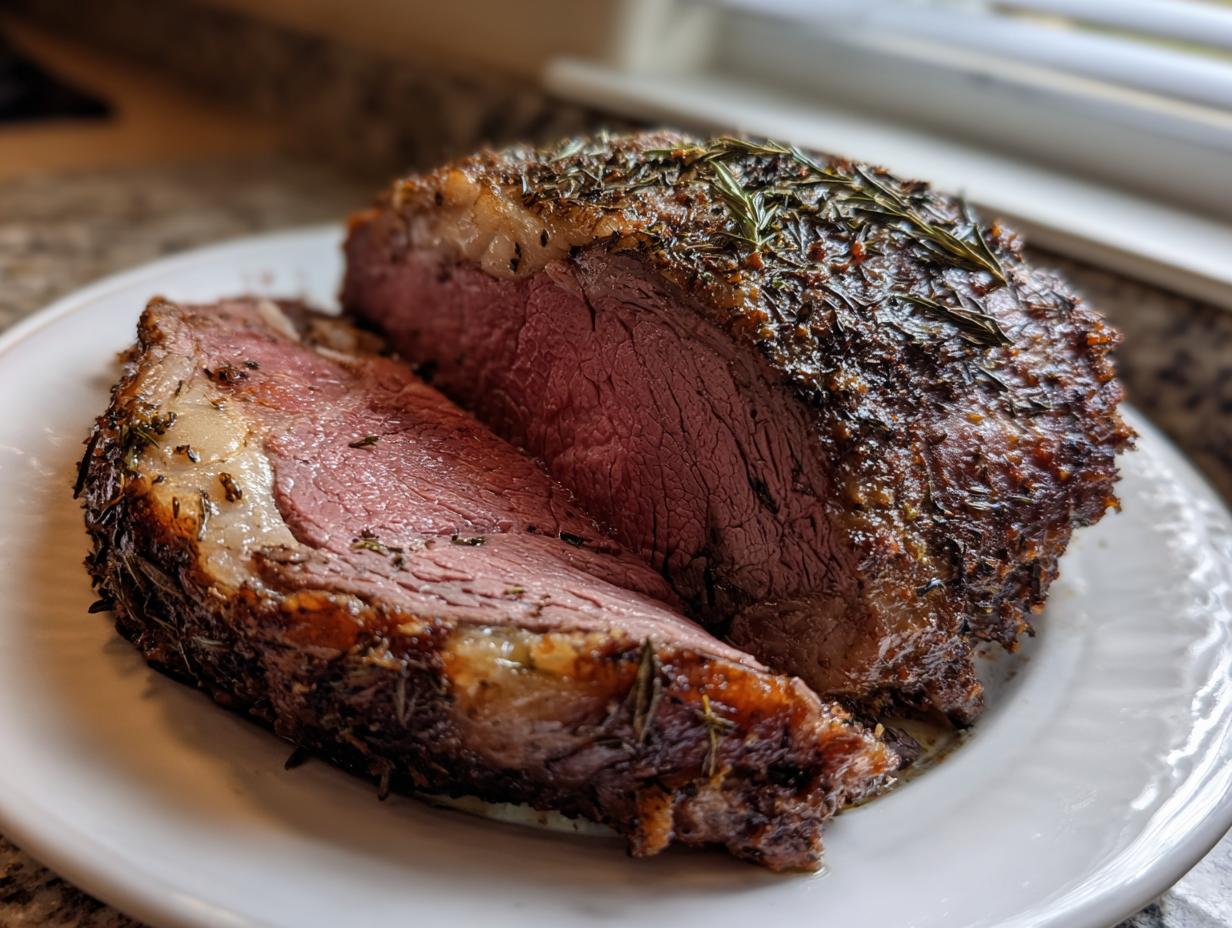
Oh, hello there! If you’re staring down a massive, beautiful standing rib roast wondering if you’re about to make the best **prime rib recipe** of your life, or just ruin a very expensive piece of meat, I completely get it. That big roast can feel intimidating, that’s for sure! But I promise you, my goal here at Cookin’ Corner is to take the guesswork out of it. Growing up in my grandmother’s Midwest kitchen, we learned that the best meals come from reliable methods. That’s why I’m sharing this totally foolproof oven plan—it guarantees you that gorgeous, juicy, medium-rare center every single time. Seriously, after you try this **prime rib recipe**, you’re going to feel like a seasoned chef!
- Why This Garlic Herb Prime Rib Recipe Delivers Restaurant Quality Results
- Gathering Ingredients for Your Prime Rib Recipe
- Step-by-Step Oven Roasted Prime Rib Guide Instructions
- Achieving the Perfect Medium Rare Roast: Temperature Chart
- Resting and Carving: Making Your Prime Rib Recipe Shine
- Serving Suggestions for Your Standing Rib Roast Recipe Centerpiece
- Storage and Reheating for Leftover Roast Beef
- Frequently Asked Questions About Cooking Prime Rib
- Nutrition Estimate for This Roast Beef Dish
Why This Garlic Herb Prime Rib Recipe Delivers Restaurant Quality Results
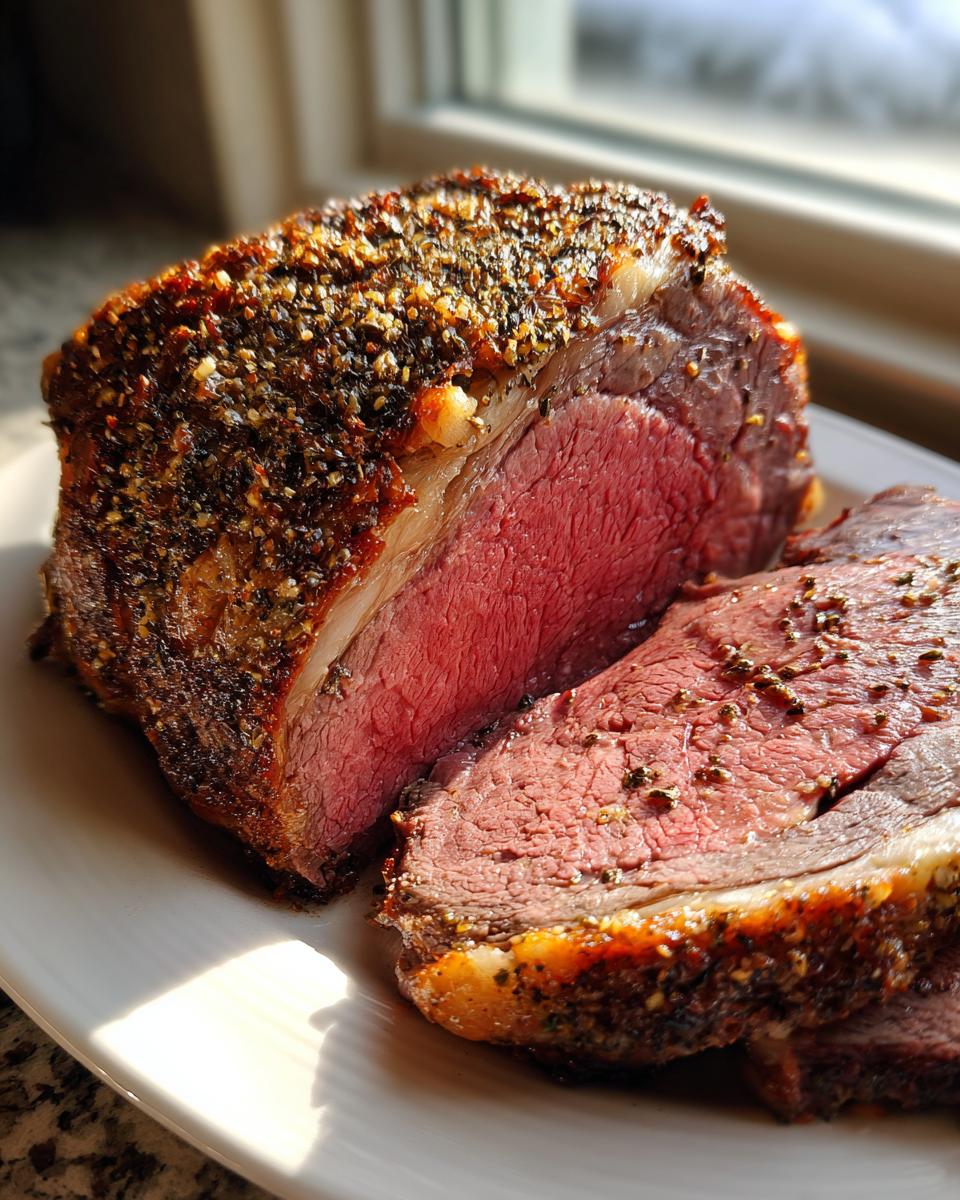
We aren’t just throwing this beautiful beef into the oven and hoping for the best, no sir! This prime rib recipe is designed for consistency, which is why it keeps coming out as juicy tender roast beef. The technique itself ensures that melt-in-your-mouth texture you expect when you pay top dollar at a steakhouse. You’ll get that fantastic outer crust while keeping the inside perfectly pink.
The Importance of Temperature: Mastering the Prime Rib Cooking Method
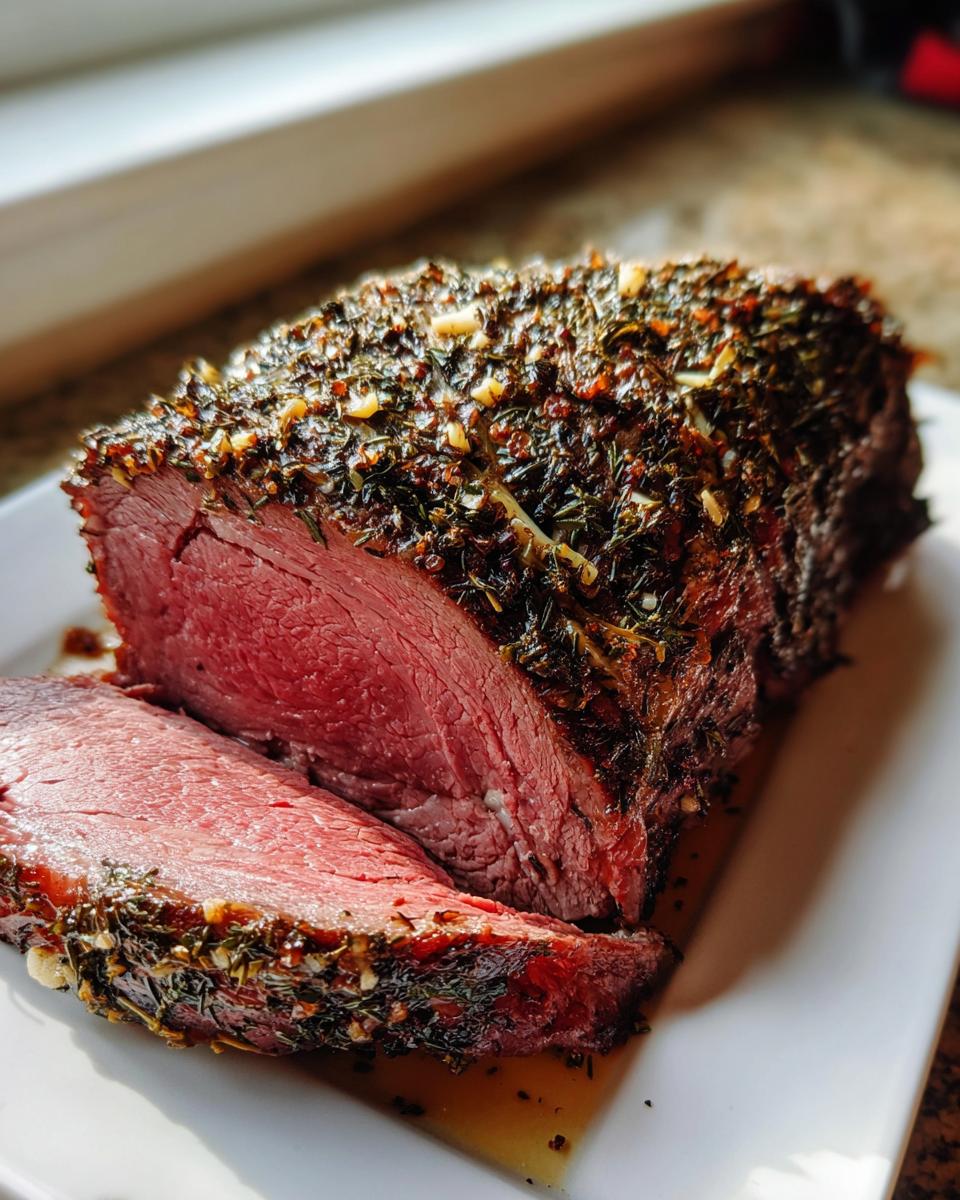
The secret sauce here is the two-temperature method—it’s the best prime rib cooking method for success. We blast it hot for 15 minutes at 500 degrees to lock in those lovely juices and get that beautiful color. Then, we drop the heat way down to 325 degrees. This careful temperature dance is how we hit that perfect medium rare roast without stressing me out!
Creating the Flavorful Garlic Herb Prime Rib Rub
You have to treat your roast right before it hits the heat. Our garlic herb prime rib rub is loaded with fresh rosemary and thyme, not that dried-out jar stuff. We mix all those strong flavors right into softened butter. That crust melts slightly as it sears, basting the meat while it cooks, which locks in flavor right near the surface. You can check out my tips for another great crust version here: perfect herb-crusted rib roast recipe.
Gathering Ingredients for Your Prime Rib Recipe
Okay, let’s talk ingredients for this centerpiece meal. When you’re making something this special, you can’t skimp! I always have everything ready and waiting on the counter before I even think about waking up the oven. We need quality here, my friends, because the flavor of the beef really sings through.
Since this is the main event for your holiday table, I always opt for a bone-in roast. Here is what you need for our flavorful rub:
- 1 (5-7 lb) bone-in prime rib roast (standing rib roast)
- 1/4 cup softened butter
- 4 cloves garlic, minced
- 2 tablespoons fresh rosemary, chopped
- 1 tablespoon fresh thyme leaves
- 2 tablespoons coarse sea salt
- 1 tablespoon freshly ground black pepper
- 1 tablespoon olive oil
See how specific I am? The butter needs to be truly softened—not melted, just soft enough to mix into that beautiful paste we talked about. And please, use fresh herbs if you can; they make a world of difference when you’re going for that restaurant quality prime rib!
Choosing the Right Cut: Bone-In vs. Boneless
This is a huge question I always get asked, especially when people are looking for an easy prime rib for guests. I strongly recommend going bone-in for this prime rib recipe. The bones actually act like a little built-in shield!
What that means for you is that the bone acts as insulation, keeping the meat closest to the bone slightly less cooked and definitely more protected from the dry heat in the oven. If you use a boneless roast, you will likely need to adjust your cooking time slightly downward. For the foolproof method, bone-in gives you a little bit of wiggle room, which is exactly what we want when aiming for that perfect medium rare roast.
Step-by-Step Oven Roasted Prime Rib Guide Instructions
This is where the magic truly happens, and I’m going to walk you through every single step to make sure your Oven Roasted Prime Rib Guide is successful. Don’t worry about math or trying to convert oven times—we are relying on the thermometer, which is the only way to get that true, juicy tender roast beef result. Trust me, once you see how easy this becomes, you’ll want to make this **prime rib recipe** every Sunday!
Preparation: Tempering and Rub Application for the Prime Rib Recipe
Before we even turn on the heat, we need to take care of the meat. You absolutely have to take that beautiful cut of beef out of the fridge about two to three hours before you plan on cooking it. This is called tempering, and if you skip it, the center of your roast will be cold while the edges cook way too fast. We need this piece of beef to be close to room temperature for even cooking. This is where I show the true care my grandmother instilled in me!
Once it’s tempered, pat that surface of the roast bone-dry with paper towels. We need it dry so the garlic herb rub sticks properly and browns up nicely. Go ahead and rub that olive oil over everything first, and then really massage that herb butter mixture all over. Don’t be shy! Try to get it everywhere you can reach. If you need a variation on the rub later on, I have a great guide for an easy herb-crusted prime rib roast recipe that uses a similar technique!
Roasting Sequence: Searing and Low-Temperature Cooking
Get that oven screaming hot to 500 degrees Fahrenheit. Place the prepared roast right in the pan, fat side up, and let it sear for a strict 15 minutes. This high heat is crucial for developing flavor on the outside. Now, don’t open the door! After those 15 minutes are up, without letting heat escape, drop the temperature way down to 325 degrees Fahrenheit. Then, you just let it ride, checking the temperature often.
You’re aiming for 125 degrees Fahrenheit internally for that recommended medium-rare finish. Keep pushing that thermometer in the thickest spot, making sure you aren’t touching bone, because bones get hotter than meat and will lie to you! For more tips on getting your roast just right and making sure it doesn’t stick, check out this great guide: Whitney Bond’s Prime Rib guide on preparing the roast.
Achieving the Perfect Medium Rare Roast: Temperature Chart
Now we’re getting into science territory, and this is where you really earn that five-star rating from your guests! I know temperatures can feel scary when dealing with a huge, expensive cut like this prime rib, but trust me, having a reliable meat thermometer is your very best friend. Since we are aiming for that incredible, perfect medium rare roast—tender, beautifully pink, and juicy—we have to pull it out of the oven a little early because of something called carryover cooking.
That big hunk of meat stays hot for a good while after you pull it! If you wait until it hits 130°F inside the oven for medium-rare, by the time you carve it, it’ll be well into medium territory. Yuck! So, we target 125°F when we take it out. This little trick is what separates the home cooks from the kitchen legends.
Here is the temperature chart I always keep taped up near my prep station for any big **standing rib roast recipe**:
- Rare: Remove at 115°F (It will rise to about 120°F)
- Medium-Rare (My recommendation!): Remove at 125°F (It will rise to about 130°F–135°F)
- Medium: Remove at 135°F (It will rise to about 140°F–145°F)
If you’re nervous about using a thermometer, a great resource that walks through checking different roasts is this guide on how to prepare prime rib roast from Better Homes & Gardens. But honestly, getting a decent digital thermometer is worth every penny if you plan on making any large beef roast in the future!
Resting and Carving: Making Your Prime Rib Recipe Shine
We’ve done the hard work—the searing, the slow roast, watching that thermometer like a hawk—and now the roast is perfect on the inside. But here’s the part where people panic and ruin everything: carving too soon! This is the most crucial secret to ensure your prime rib recipe yields that unbelievably juicy result we’ve been aiming for.
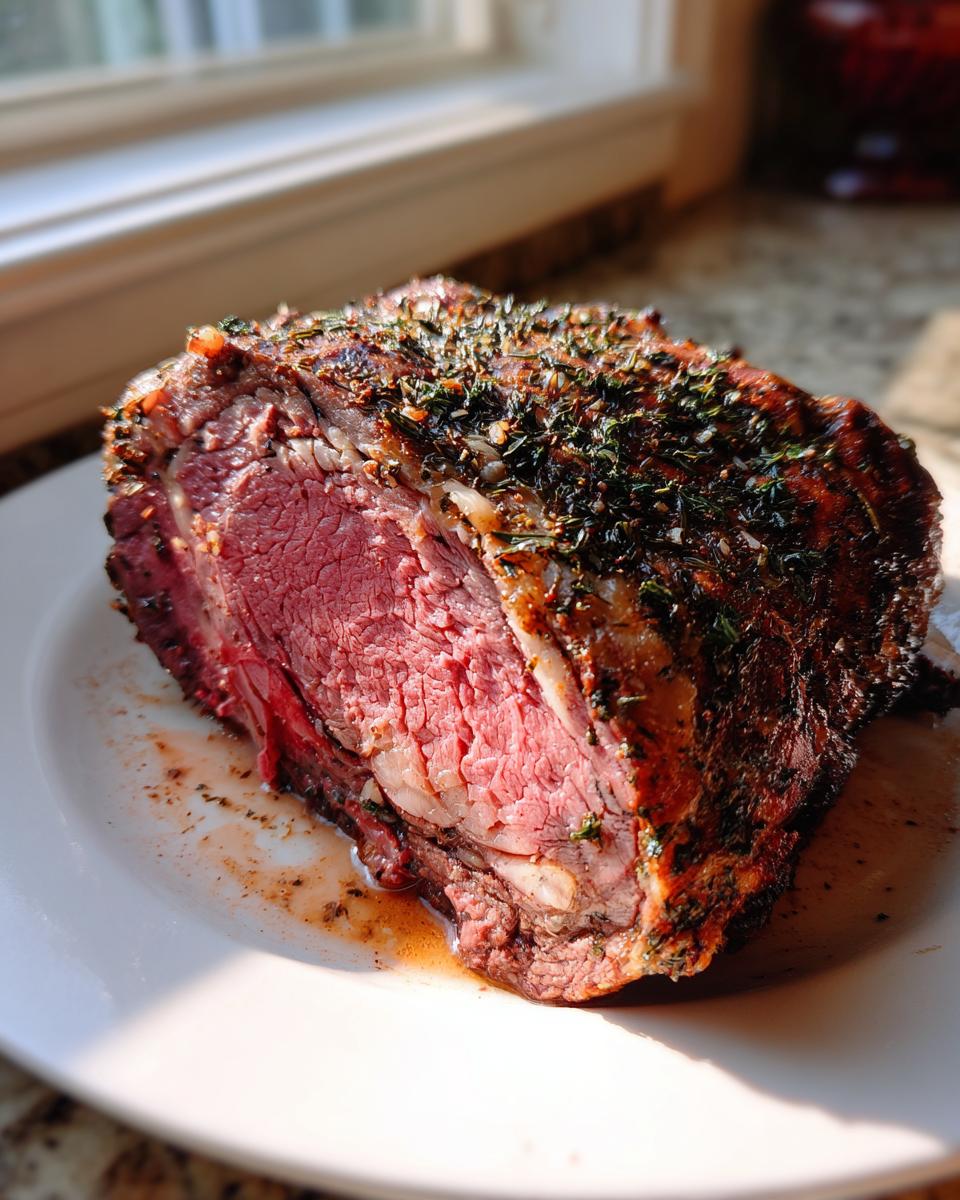
You absolutely must let that roast rest for a minimum of 20 to 30 minutes after it comes out of the oven. I know, 30 minutes feels like an eternity when hungry guests are waiting, but trust me, this is non-negotiable. When the meat is hot, those muscle fibers are tense, and the juices are all rushed to the center. If you cut into it right away, all that beautiful, flavorful moisture just floods onto your cutting board, and you’re left with dry beef.
Resting allows those muscle fibers to finally relax and reabsorb the liquid. Tent it loosely with foil while it rests—don’t wrap it tightly, or you’ll steam that gorgeous crust we worked so hard to create! Let it sit there doing its magic. While you are waiting, you can whip up a quick gravy using the drippings in the bottom of your pan—I have a super simple guide for making gravy even easy chicken gravy recipe with no drippings if you want to adapt it for beef!
Once it’s rested, it’s time to carve. This is simple: you need a very sharp knife. You must always slice against the grain of the meat. Look closely at the meat when you make your first cut; you’ll see the direction the long muscle fibers are running. Slice perpendicular to those lines. Slicing against the grain shortens those fibers, making every single bite wonderfully tender. If you cut with the grain, you end up with long, chewy strands, no matter how perfectly you cooked the roast!
Serving Suggestions for Your Standing Rib Roast Recipe Centerpiece
Now that you have achieved the absolute pinnacle of roast beef perfection—that tender, medium-rare standing rib roast recipe centerpiece—we have to make sure the supporting players on the plate are worthy! A roast this magnificent deserves sides that complement its richness, not compete with it. Don’t just throw some boring vegetables on the side; we need flavors that hug that beef right.
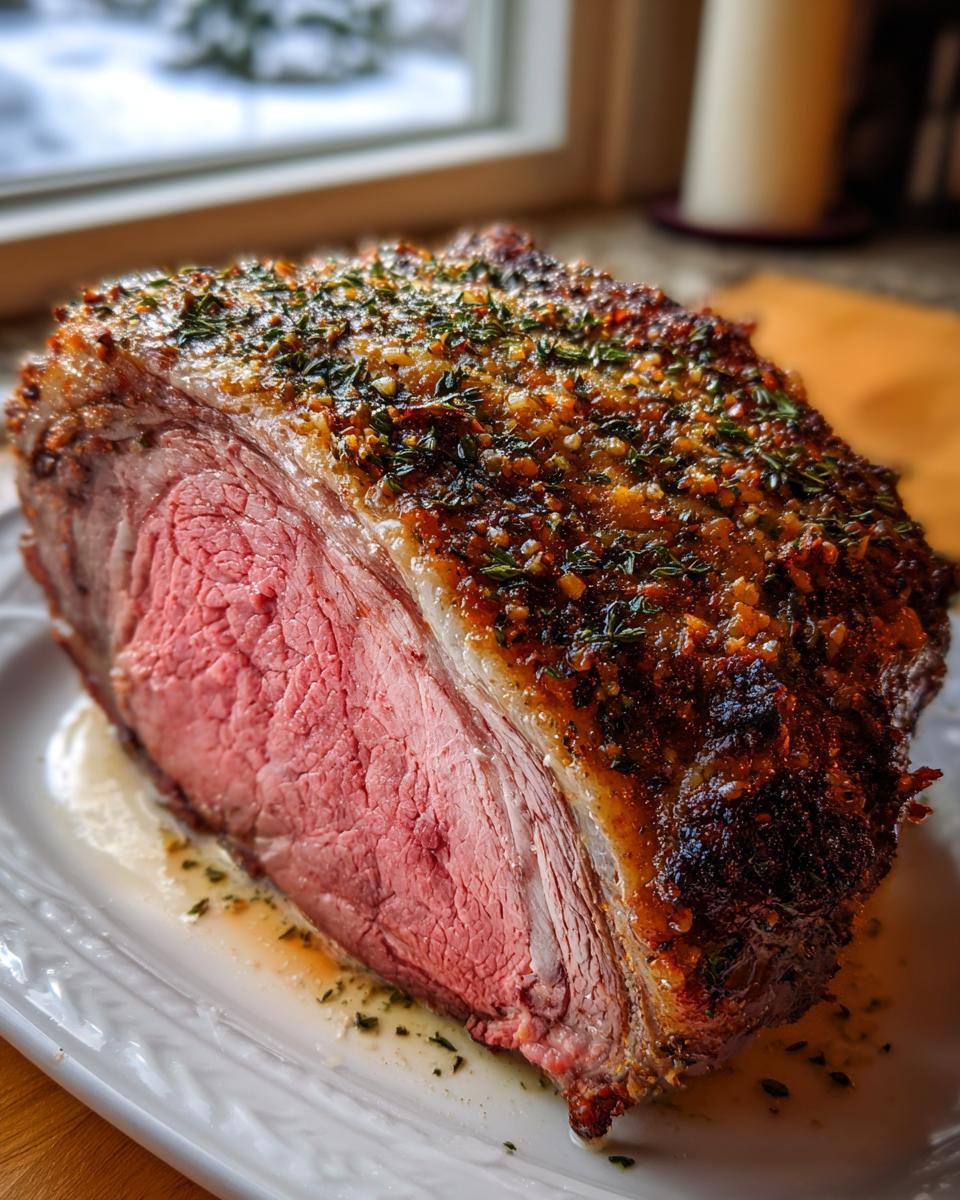
My absolute favorite thing to do immediately after pulling the roast out is dealing with those drippings. Don’t you dare wash that roasting pan! Those browned bits stuck to the bottom, called fond, are pure gold. You can easily scrape those up, whisk in a little red wine or beef broth, maybe some minced shallots, and reduce it down slightly to create a fantastic, quick Au Jus right there in the pan. It tastes a hundred times better than anything out of a packet, I promise.
For the starch side of things, you can never, ever go wrong with potatoes. They soak up the Au Jus so beautifully. I always lean toward making my creamy baked mashed potatoes recipe when I have a big roast like this. They are so rich from the cream and cheese, and you don’t have to worry about keeping a gravy warm or stirring a pot while you’re carving.
If you are looking for something green to cut through all that richness, keep it simple. A crisp green vegetable like roasted asparagus tossed with a little lemon zest, or perhaps some creamed spinach, works wonderfully. The goal is to honor the beef! Keep your palate refreshed so you can take another bite of that spectacular juicy tender roast beef.
Storage and Reheating for Leftover Roast Beef
Oh, the glorious leftovers! If you managed to keep any of this perfect prime rib around—which, honestly, is a triumph in itself—we need to store it right so it stays tasting like a dream and not like shoe leather the next day. The key here when dealing with leftover roast beef is moisture retention. We don’t want to dry out the meat we worked so hard to keep juicy!
First things first: slice it thinly, but don’t go paper-thin. I usually slice it about the thickness of a quarter, slicing against the grain, just like we did when we carved it fresh. This is so important! Once the roast cools down completely—and I mean truly cool, not lukewarm—pack those slices tightly into an airtight container. You can keep this in the fridge for about three to four days, max.
Now, the reheating part is where most people go wrong, and it’s why their leftover roast feels sad. You should never, ever just toss the slices back into the microwave naked! That’s a one-way ticket to dry, tough meat.
The absolute best warming method involves broth. Find a shallow baking dish and pour just a tiny layer of beef broth—or even just water—into the bottom. You just need enough liquid to cover the bottom inch or so. Lay your prime rib slices in a single, slightly overlapping layer. Cover that dish tightly with foil. You are essentially poaching the meat gently back to serving temperature.
Put that covered dish in a low oven—say, 300 degrees F—just long enough to warm it through. Five to ten minutes is usually plenty. This gentle, moist heat brings the meat back to life without cooking it any further, keeping it unbelievably tender. Serve it up with any remaining Au Jus you saved, and honestly, it’s almost as good as fresh!
Frequently Asked Questions About Cooking Prime Rib
I knew you’d have questions! When you see a big, beautiful roast like this, it’s totally natural to have a few worries before you start. Don’t sweat it; that’s why I’m here—to give you confidence in the kitchen, especially when tackling a true Holiday Roast Recipe centerpiece like this one. People ask me all the time about tweaks and alternatives for this prime rib recipe, so let’s clear up the most common ones right now!
Can I use the 500 Degree Method for a Boneless Roast?
Yes, absolutely! You can use the exact same two-temperature method for a boneless roast. Remember how I said the bone acts as an insulator? Well, without it, the heat penetrates the meat faster. So, while the 15 minutes at 500°F is still a great way to start that crust development, you’ll need to reduce your overall cooking time significantly. Keep your eye glued to that meat thermometer instead of the clock! For a boneless roast, start checking the temperature about 20 minutes sooner than you would for a bone-in cut of the same weight.
What is the Best Way to Make Au Jus?
Oh, this is my favorite part of cleanup! The prime rib recipe itself leaves you with the most flavorful liquid already waiting for you. The very Best Way to Make Au Jus is to use the pan drippings—that dark, crusty goodness stuck to the bottom of your roasting pan after you remove the roast. That sticky stuff is called fond, and it’s pure flavor!
Here is my simple trick: As soon as the roast is resting, put your pan on the stovetop over medium heat. Add maybe a cup of beef broth or even just water, and use a wooden spoon to scrape up every last bit of brown goodness. Let that simmer for about five minutes, and strain it through a fine-mesh sieve. That’s it! That’s your instant, flavorful Au Jus. You don’t need any fancy recipes; those drippings are the real deal for serving alongside your Juicy Tender Roast Beef.
If you’re looking for a hearty, comforting side dish that pairs perfectly with that savory juice, you should check out my recipe for easy crockpot potato soup. It uses the slow cooker, so it doesn’t steal oven space, and it’s pure comfort food!
Nutrition Estimate for This Roast Beef Dish
Now, I’m not a nutritionist, so take these numbers with a grain of salt—or maybe a sprinkle of coarse sea salt from the rub! This information is a general estimate based on the ingredients listed above for this prime rib recipe and the yield of 6 to 8 servings. This is just to give you a ballpark idea, especially if you’re tracking macros for your big holiday feast.
Since we are dealing with a beautiful, naturally low-carb roast beef centerpiece, the macros lean heavily into protein and healthy fats, assuming you aren’t overly generous with the garlic herb butter rub on every single slice!
Here’s what the rough estimate looks like for one 6-ounce serving of this incredible roast beef:
- Serving Size: 6 oz cooked
- Calories: 450
- Sugar: 0g
- Sodium: 350mg (This is mostly from the salt in the rub!)
- Fat: 30g
- Saturated Fat: 14g
- Unsaturated Fat: 16g
- Trans Fat: 0g
- Carbohydrates: 1g
- Fiber: 0g
- Protein: 40g
- Cholesterol: 140mg
See that 40 grams of protein? That’s what keeps you feeling satisfied! Just remember, if you drown your **Standing Rib Roast Recipe** portion in a heavy Au Jus made with flour-thickened drippings, your carb and fat counts will creep up a bit. Keep it light like we planned, and you’ve got a winning, incredibly delicious centerpiece!
PrintFoolproof Garlic Herb Prime Rib Roast Recipe for a Perfect Medium-Rare Centerpiece
Follow this simple oven method to cook a juicy, tender prime rib roast with a flavorful garlic herb crust. This recipe guarantees restaurant quality results for your holiday dinner.
- Prep Time: 20 min
- Cook Time: 2 hr 30 min
- Total Time: 3 hr 50 min
- Yield: 6-8 servings 1x
- Category: Dinner
- Method: Oven Roasting
- Cuisine: American
- Diet: Low Fat
Ingredients
- 1 (5-7 lb) bone-in prime rib roast (standing rib roast)
- 1/4 cup softened butter
- 4 cloves garlic, minced
- 2 tablespoons fresh rosemary, chopped
- 1 tablespoon fresh thyme leaves
- 2 tablespoons coarse sea salt
- 1 tablespoon freshly ground black pepper
- 1 tablespoon olive oil
Instructions
- Remove the prime rib roast from the refrigerator 2 to 3 hours before cooking to allow it to come closer to room temperature. This helps the roast cook evenly.
- Preheat your oven to 500 degrees Fahrenheit.
- Prepare the herb butter rub: In a small bowl, combine the softened butter, minced garlic, chopped rosemary, thyme leaves, coarse sea salt, and black pepper. Mix until you have a uniform paste.
- Pat the entire surface of the prime rib roast dry with paper towels. Rub the olive oil over the roast first.
- Spread the garlic herb butter rub evenly over the entire surface of the roast, pressing it gently into the meat.
- Place the roast, fat side up, in a roasting pan on a rack. Do not add any liquid to the pan.
- Sear the roast: Place the pan in the preheated 500°F oven and roast for exactly 15 minutes.
- Reduce the oven temperature to 325 degrees Fahrenheit without opening the oven door. Continue roasting until the internal temperature reaches your desired doneness. Use a meat thermometer inserted into the thickest part of the roast, avoiding bone contact.
- For medium-rare (recommended), remove the roast when the internal temperature reads 125 degrees Fahrenheit.
- Remove the roast from the oven. Tent it loosely with foil and let it rest for at least 20 to 30 minutes before carving. The internal temperature will rise about 5 to 10 degrees during resting.
- Slice against the grain and serve with pan drippings or homemade au jus sauce.
Notes
- For bone-in cuts, the bone acts as insulation, which can slightly increase cooking time compared to boneless cuts of the same weight.
- If you prefer a crustier exterior, you can briefly place the roast under the broiler for 1-2 minutes after resting, watching carefully to prevent burning the herbs.
- This method is the best prime rib cooking method for achieving a perfect medium rare roast consistently.
Nutrition
- Serving Size: 6 oz cooked
- Calories: 450
- Sugar: 0
- Sodium: 350
- Fat: 30
- Saturated Fat: 14
- Unsaturated Fat: 16
- Trans Fat: 0
- Carbohydrates: 1
- Fiber: 0
- Protein: 40
- Cholesterol: 140