

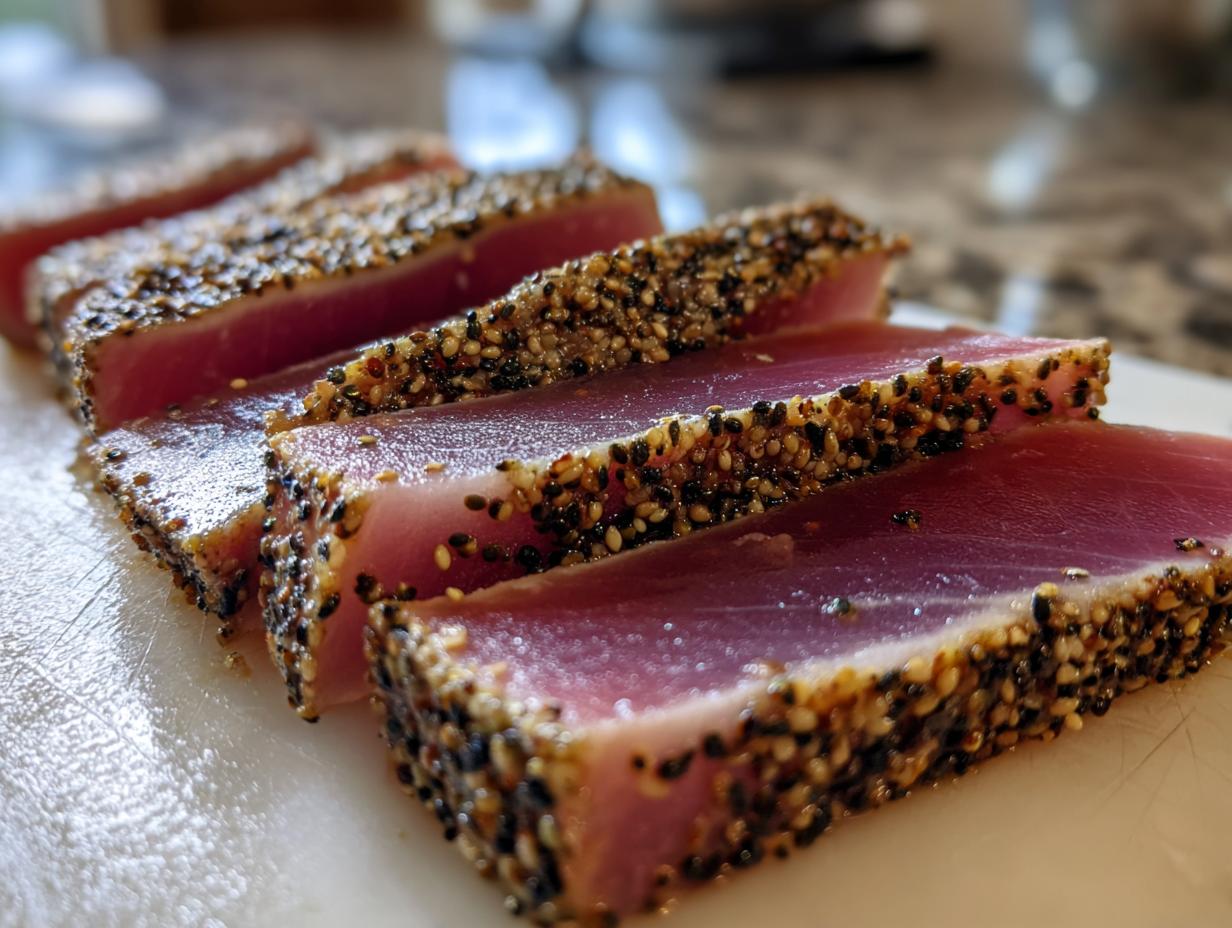
Listen, I know eating seafood that looks like it came from a fancy waterfront restaurant feels intimidating. But trust me, getting that beautiful, warm crust and perfectly cool center on your Seared Ahi Tuna steaks is shockingly easy—easier, even, than making a standard weeknight roast chicken! My family always taught me that the best food comes from the simplest ingredients handled with care, and this dish proves it every time. This foolproof searing method guarantees you get that incredible, gourmet tuna texture right here in your own kitchen. Forget complicated sauces; this is about pure technique, and I’m going to walk you through every second of it.
- Why This Seared Ahi Tuna Recipe Delivers Gourmet Tuna
- Essential Ingredients for Perfect Seared Ahi Tuna
- Mastering the Marinade for Your Asian Tuna Recipe
- The Art of Coating: Preparing for the High-Heat Seared Ahi Tuna
- Achieving the Perfect Sear on Your Yellowfin Tuna Steaks
- Slicing and Resting for the Best Seared Ahi Tuna Presentation
- Serving Suggestions for Your Seared Ahi Tuna
- Storage and Reheating Instructions
- Frequently Asked Questions About Seared Ahi Tuna
- Estimated Nutritional Data for Seared Ahi Tuna
- Share Your Perfect Seared Ahi Tuna Success
Why This Seared Ahi Tuna Recipe Delivers Gourmet Tuna
People always ask me how I get that beautiful, sushi-grade texture without actually taking a sushi class. The secret is really just respecting the fish and using high heat! This method elevates simple ingredients into something truly incredible. It’s fast, it’s flavorful, and honestly, it makes you feel like a culinary genius when you serve it.
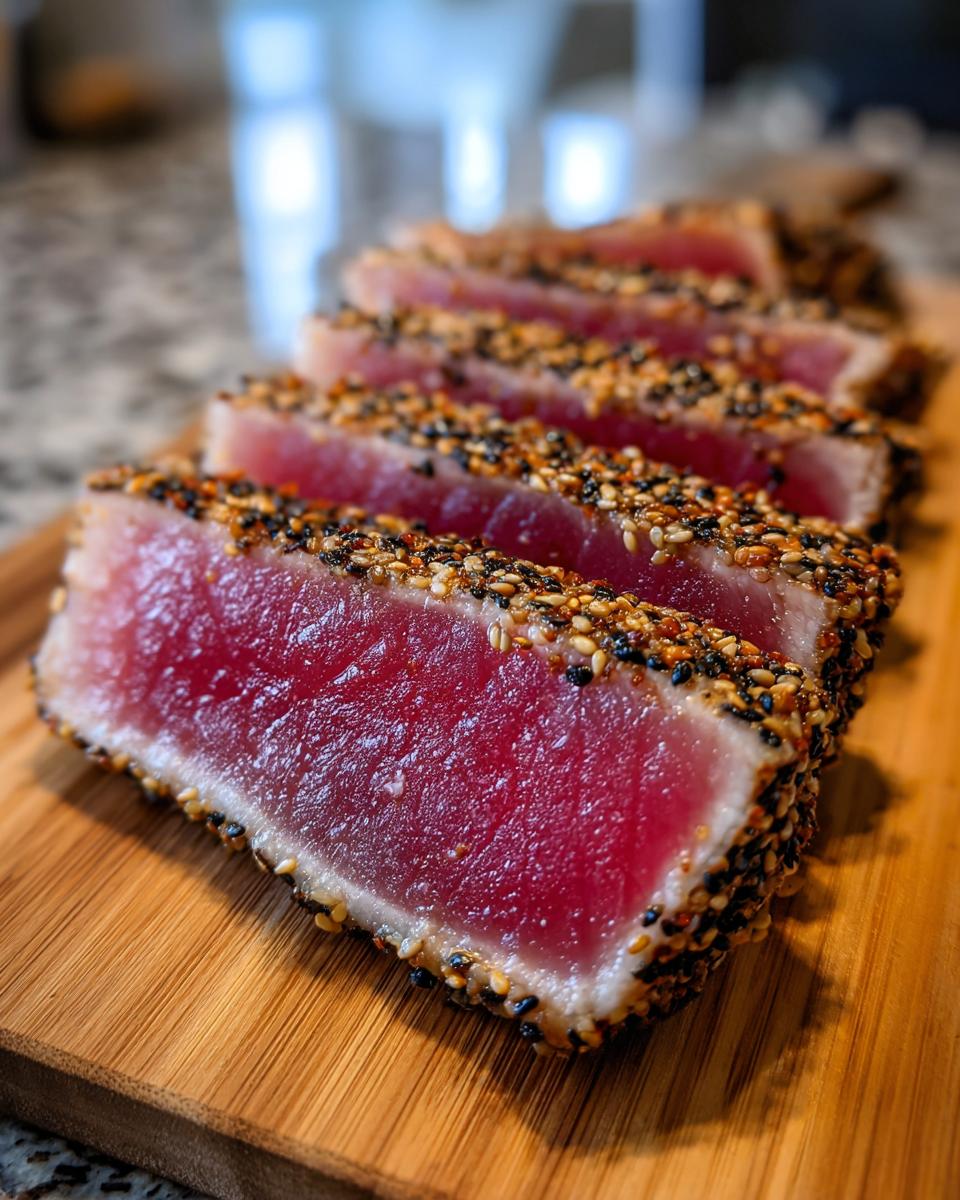
- It tastes like a million bucks but takes almost no time at all—pure efficiency in the kitchen!
- The flavor profile is bright and deeply savory, thanks to the light marinade and sesame crust.
- This makes for a fantastic healthy dinner option without sacrificing that rich, satisfying meal feeling.
Quick Seafood Recipe Ready in Under 20 Minutes
For those nights when you want an impressive meal but you’re already tired—I get it! This entire process is designed for speed. You’re looking at just about 15 minutes of prep time, and the actual cooking is done in about 4 minutes total. Can you believe that? We’re talking a restaurant-quality experience on your plate in less than 20 minutes from start to finish!
Essential Ingredients for Perfect Seared Ahi Tuna
Okay, this is where we need to pay attention. Because this recipe is so quick, the quality of your main ingredient absolutely matters more than anything else. If you want that incredible melt-in-your-mouth experience, you MUST start with truly excellent sushi grade tuna. Don’t eyeball this—ask your fish guy specifically for fresh, sashimi or sushi-grade yellowfin or bigeye!
We keep the supporting cast really simple so the tuna flavor shines through. You’ll need a couple tablespoons of sesame oil, soy sauce for depth, and fresh aromatics. Since we are only marinating for 10 minutes, we need that ginger grated super fine, not just roughly chopped. And that garlic? Minced really small! If you can’t find super fresh ginger, it’s better to skip it, honestly. Sourcing great fish is the number one rule in my book; it’s the heart of this dish, and there’s no hiding poor quality when you sear it this fast.
Ingredient Notes and Substitution Guidance
When you’re mixing that light marinade, remember that soy sauce is potent. If you happen to be serving someone who can’t handle gluten, don’t stress—just swap in tamari; it works perfectly fine in this quick bath and gives you the same salty punch. For the oil, use untoasted (regular) sesame oil for the marinade unless you want the flavor to be incredibly strong.
If you look at the notes later, you’ll see I mention a dipping sauce, and that’s a great spot to play around. If you want a little tang in your dipping sauce, just mix equal parts soy sauce and rice vinegar. Don’t add the vinegar to the main tuna marinade, though; that’s a quick route to slightly cooking the outside before you even hit the pan!
Mastering the Marinade for Your Asian Tuna Recipe
Now that we have those beautiful, coated slabs of fish, we move straight into the flavor bath, which is another area where timing is everything! You’re just whisking together your sesame oil, soy sauce—and don’t forget that fresh grated ginger and minced garlic—until it’s happy. Once that’s ready, pour it over your tuna steaks. Make sure both sides get a good coating, but here is the big, non-negotiable secret, folks: You only let it sit for 10 minutes, max!
Seriously, stop checking your phone, put the TV on mute, and just watch the clock. If you leave your gorgeous sushi grade tuna marinating for 20 or 30 minutes, the soy sauce, which is acidic and salty, starts doing its job too well. It actually starts to cure the outside of the fish, turning it opaque, which is exactly what you want to avoid when you’re aiming for that cool, raw center post-sear. Ten minutes is perfect for letting those savory, Asian-inspired notes soak in just enough without starting the actual cooking process! Then, scrape that marinade right off before you move to the next step!
The Art of Coating: Preparing for the High-Heat Seared Ahi Tuna
Once the marinating time is up—and I mean *up*—we need to get that beautiful fish ready for the incredible heat treatment. You don’t want any excess liquid clinging to the steaks because moisture is the absolute enemy of a good sear. So, pull those tuna steaks out of the marinade and let the extra drips fall right back into the dish.
Next up is the crust! We’re using a nice, generous plate of mixed black and white sesame seeds. I really encourage you to mix them! It might seem like a small thing, but having both colors peppering the crust just screams high-end, gourmet tuna when you slice it later. It adds so much visual pop!
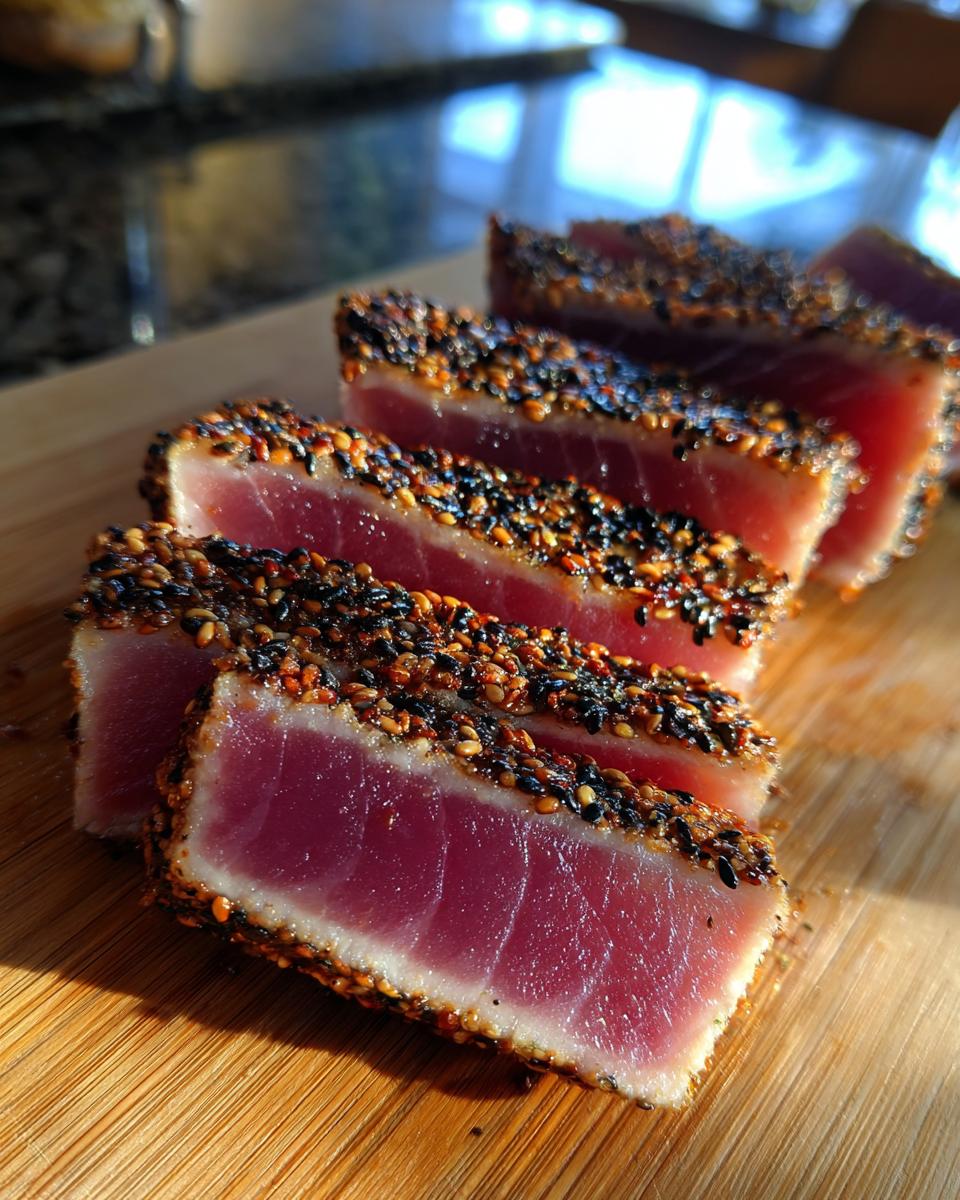
Take one sesame-crusted side and press it firmly into those seeds. We aren’t just rolling it gently here; you need to apply some real pressure, like you’re trying to stick a bumper sticker on a car! You want those seeds to adhere deeply and create a thick, locking layer all the way around. Flip it, press the other side firmly into the seeds, and check the edges too. You are building a protective shell for that raw center. This coat keeps the delicate fish from overcooking while giving you that delightful little crunch when you bite in!
Achieving the Perfect Sear on Your Yellowfin Tuna Steaks
Alright, folks, this is it—the moment of truth where we transform that crusted fish into amazing Seared Ahi Tuna. Forget lukewarm pans; we are aiming for fire here! Your skillet, preferably cast iron because it holds heat like nothing else, needs to be screaming hot. I mean, I want to see just the slightest wisp of smoke coming off the surface before those steaks ever touch down. This high heat is what locks in that beautiful sesame crust instantly and keeps the inside raw.
Carefully place your crusted sushi grade tuna steaks right into that sizzling, dry pan. No extra oil needed in the pan itself since the marinade gave us enough lubrication. Now, you need a timer, whether it’s your phone or just counting in your head. For the classic, cool-in-the-center rare look—which is how I insist everyone try it first!—you need just 60 to 90 seconds per side. If you absolutely insist on it being a little more cooked toward the center, bump that up to two minutes per side for medium-rare, but please, don’t go past that!
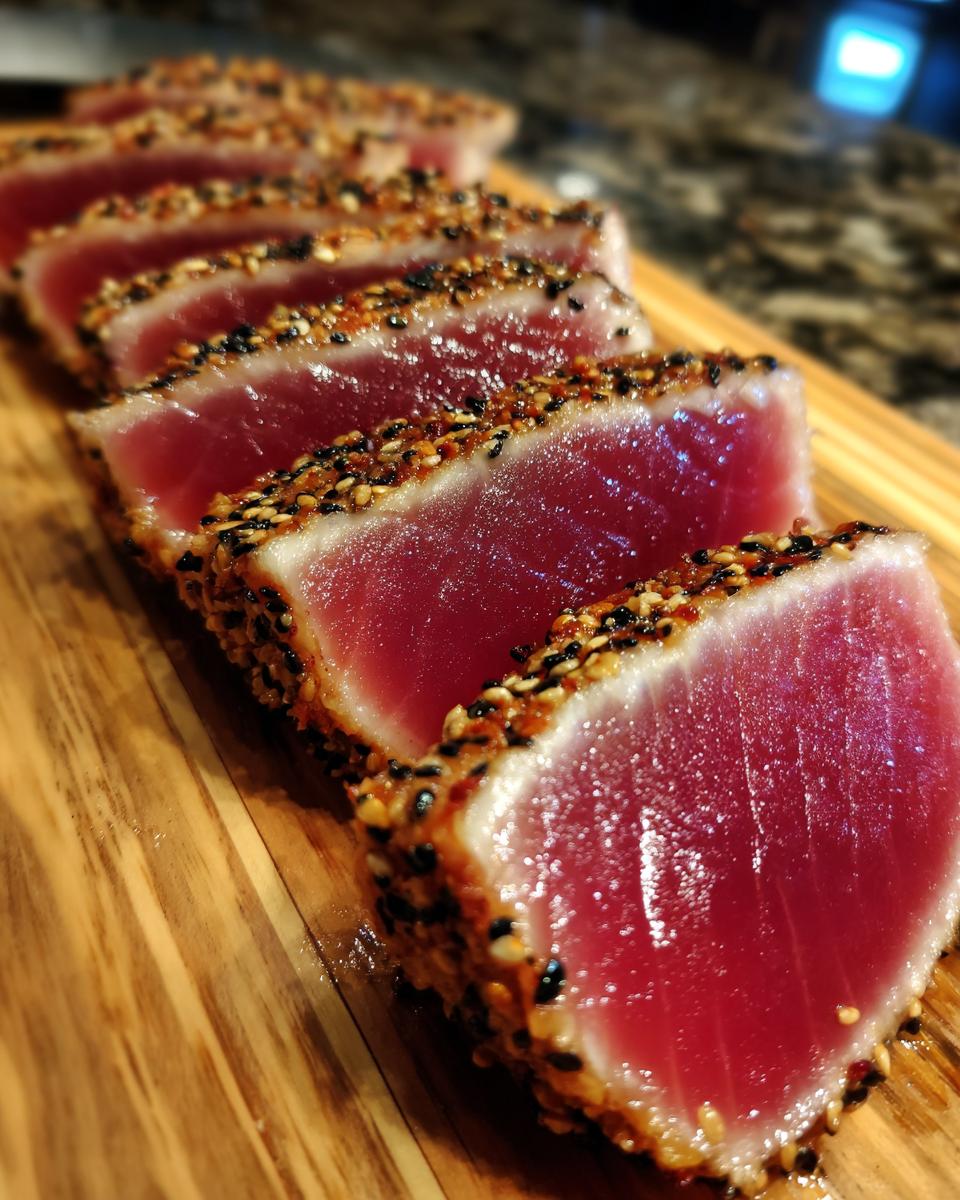
Pull them out immediately once the time is up. Seriously, pull them out! That residual heat is still cooking them, and we want that contrast—warm, crispy coating giving way to cool, fresh yellowfin tuna. I still find myself staring at the pan, tempted to give it five more seconds, but resist that urge! Trust me on the timing; it’s that crucial step that gets this recipe right every time.
Troubleshooting Common Searing Issues
Sometimes things don’t go perfectly right away, and that’s okay! Home cooking is a process, right? The biggest disaster you can have here is starting with a pan that isn’t hot enough. If your skillet is too cool, those beautiful sesame seeds are just going to slowly toast and eventually burn before the tuna even gets a chance to form that crust.
If you notice the seeds are turning deep brown or black before you even flip the steak, stop cooking right there! You need to take the tuna out, dump the pan on a cool surface to stop the cooking instantly, let the pan come back up to an intense, smoking heat, and then try again. You might even need to wipe out the pan slightly if the seeds left behind start smoking too much. The crust needs to form almost instantly on contact. If you don’t get that beautiful, hard sear, the texture of the whole dish suffers, plain and simple. Hot pan equals gourmet tuna, every single time!
Slicing and Resting for the Best Seared Ahi Tuna Presentation
Okay, you’ve pulled your perfectly seared fish from that blasting hot pan—don’t rush it! Just like a beautiful steak, your Seared Ahi Tuna needs a little quiet time to settle down before you massacre it with a knife. We need to let those juices redistribute. If you slice it right away, all that incredible flavor you just worked so hard to lock in will just bleed out onto your cutting board. Sadness!
Take those crusted steaks and gently place them on a cutting board. Don’t cover them tightly; just let them sit untouched for a solid 5 minutes. This resting period is key to keeping your final plate looking like something truly upscale and supporting that gourmet tuna vibe you’re aiming for.
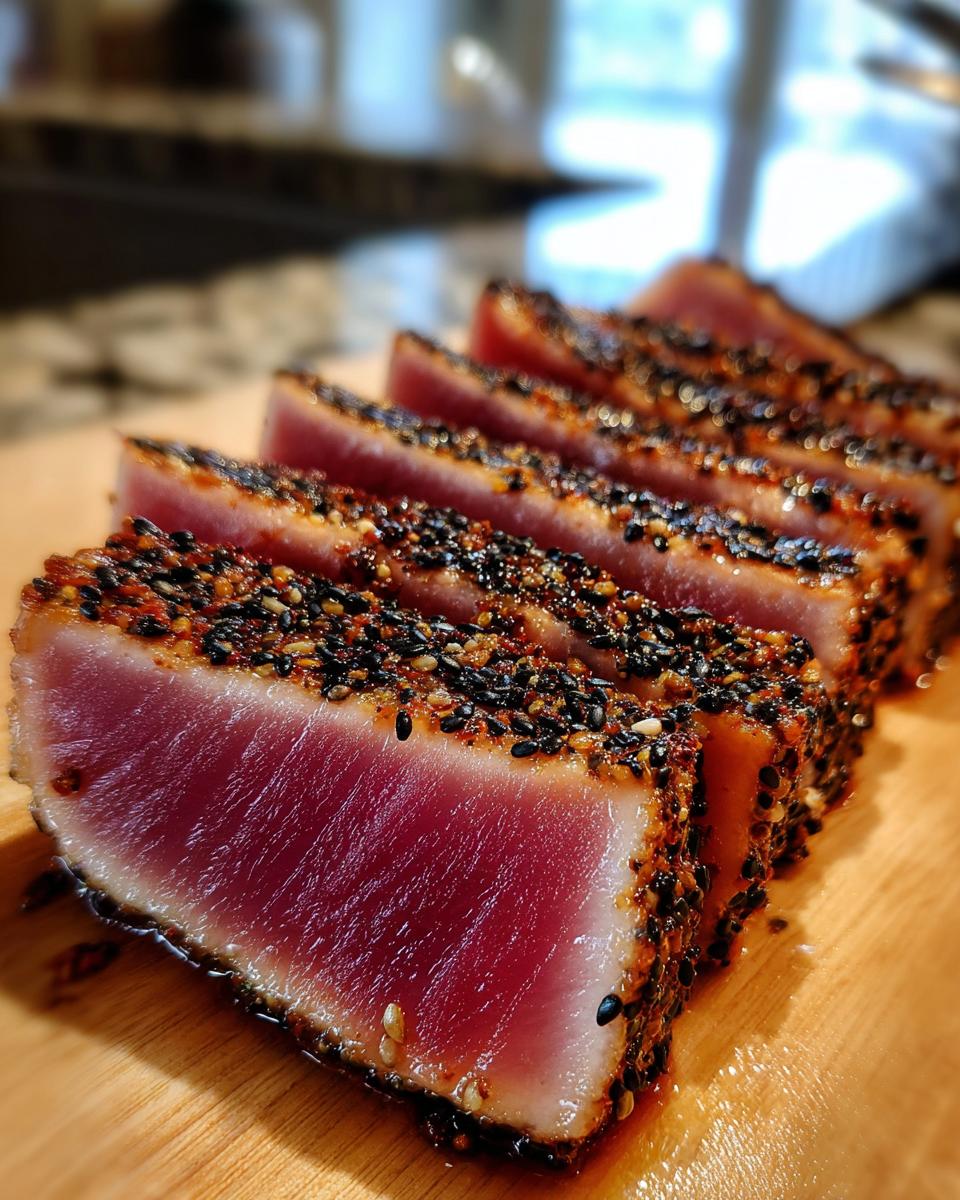
Now for the slicing technique, pay close attention here because this makes a huge difference in how chewy or tender those slices feel in your mouth. You absolutely must slice the tuna against the grain. Look closely at the steak before cutting; you’ll see the muscle fibers running in one direction—that’s the grain. You want your knife edge going perpendicular to those lines.
Use your sharpest knife for this, not a dull sawing motion! Slice thinly, about 1/4-inch thick pieces. When you slice against the grain, you sever those long fibers, which makes every single piece melt in your mouth. If you slice parallel to the grain, you end up with those long, stringy bits of fish that are chewy. We want tender perfection here! Once they are sliced, fan them out nicely on your serving plate, and wow—you just nailed restaurant-quality seafood!
Serving Suggestions for Your Seared Ahi Tuna
So, you’ve got this gorgeous, perfectly seared plate of smoky, sesame-crusted fish sitting in front of you. What do you serve with it? Because this dish is so quick and the flavors are so clean and bright, you don’t want to weigh it down with heavy sides. We want to respect that lovely, light profile!
My absolute favorite way to enjoy this is just over a bed of warm, slightly sticky sushi rice. It soaks up any little bit of marinade that might have dripped off, which prevents any waste, and that warm rice against the cool tuna is just divine. You can add a little finely sliced cucumber or some avocado slices right on the side for texture.
If rice isn’t your thing, a simple salad works wonders. Think mixed greens tossed in a light vinaigrette—maybe something with rice wine vinegar and a drop of honey. Or, if you are looking for something green and fun, steam up some edamame pods and sprinkle them with a little sea salt. That makes a fantastic side that really complements the Asian tuna recipe vibe we’ve got going on here.
And don’t forget that dipping sauce I mentioned! Have a little dish ready for dipping. That simple mix of equal parts soy sauce and rice vinegar, maybe with a tiny squirt of sriracha if you like a kick, is the perfect bright counterpoint to the rich tuna. Just remember to keep that sauce separate; you never want to pour it over the fish, or you’ll ruin that beautiful sesame crust you worked so hard to press on!
Storage and Reheating Instructions
Here’s the one part of this amazing recipe where I have to put my foot down: you really, truly need to eat your Seared Ahi Tuna right after you slice it. I mean it! This fish is magic because of that moment—the immediate contrast between the warm, toasted sesame seeds and the cool, raw center. As soon as you let that cook all the way through, you lose the entire point of the searing method.
If you actually end up with leftovers (which I rarely do, oops!), you should definitely store them right away in an airtight container in the coldest part of your fridge. You’ve got maybe 24 hours, tops, before the texture really starts to slip. But please, please, heed this warning: Do not try to warm this up! Even warming it slightly in a pan or microwave will turn that beautiful ruby-red center into gray, dry, and tough fish. Nobody wants that!
So how do you enjoy the leftovers? You use them cold! Think of it like eating leftover roast beef the next day. Slice those cold, leftover tuna pieces thinly and toss them into a big, vibrant salad the next afternoon. A little splash of rice vinegar dressing will perk them right up. Or, honestly, just eat a couple of slices standing over the sink cold—that’s how good they are even a day later! The texture won’t be the perfect gourmet sear anymore, no, but it will still taste incredibly fresh, provided you stored it correctly right after cooking.
Frequently Asked Questions About Seared Ahi Tuna
I get so many questions about this recipe—and honestly, I love it! It means you’re all trying to bring this fantastic, quick seafood into your weekly rotation. Here are the things I hear most often when folks are getting ready to try their first batch of Seared Ahi Tuna.
Can I use frozen tuna for this Asian tuna recipe?
Oh, I really wish I could say yes, but please don’t try it! If you thaw out frozen tuna, even seemingly good quality stuff, it just doesn’t hold up right when it hits that screaming hot pan. The thawing process usually damages the muscle structure slightly, meaning it won’t sear cleanly, and you risk getting mushy spots instead of that perfect cold center. For this specific Asian tuna recipe, you absolutely need fresh, high-quality sushi grade tuna. It’s worth the extra trip to the good fish counter, trust me!
What is the difference between Ahi and yellowfin tuna?
This trips up a lot of people, but it’s pretty straightforward! Ahi is sort of a general term used often in restaurants, and it usually refers to two main types of tuna: yellowfin or bigeye. For this recipe, either one is fantastic! If your fishmonger has beautiful, bright red slices labeled either Ahi or Yellowfin, you are good to go. The key is the texture and color; if it looks deep red and firm, it’s going to sear beautifully for your quick seafood recipe.
Is Seared Ahi Tuna considered a healthy dinner option?
Absolutely, yes! This is one of my go-to meals when I want something that feels indulgent but is actually incredibly good for you. Tuna—especially good quality yellowfin tuna—is packed with protein and those wonderful, heart-healthy omega-3 fats. Since our preparation involves barely any added oil in the pan, and the marinade is mostly soy sauce and aromatics, it easily qualifies as a fantastic healthy dinner. You load it up with rice and veggies, and it’s a powerhouse of a meal that keeps you full without weighing you down. If you try it out and love it, let me know by reaching out via my contact page!
Estimated Nutritional Data for Seared Ahi Tuna
Now, since this dish is so incredibly simple—just tuna, sesame oil, and a bit of soy flavor—it’s naturally a winner when you’re keeping track of what you eat. I always like to share the general numbers just so you know what you’re loading up on (which is mostly pure, good protein!). Remember, even though these numbers come straight from the recipe analysis, they are always just estimates. Yours might change slightly depending on how much oil you decide to press off, or which brand of soy sauce you grab!
For one serving—which is one beautiful, thick steak—here are the highlights we’re dealing with:
- Calories hover right around 250. Pretty lean for such a satisfying meal, right?
- Protein is massive here—we’re looking at about 32 grams per serving. That’s why this feels like such a substantial healthy dinner!
- Fat content is reasonable too, mostly thanks to the small amount of sesame oil used for both the marinade and the sear.
- Carbohydrates are very low, just 4 grams, because we aren’t loading this up with sugary sauces or heavy breading.
The fat content listed is primarily derived from the sesame oil we use to coat the fish. If you’re worried about that, you can always press a tiny bit harder after the sear to wick away some excess oil before resting! This recipe is meant to be a showcase for the fish itself, and generally speaking, excellent quality yellowfin tuna is a nutritional powerhouse. Don’t forget that these figures don’t include any rice or extra dipping sauce you might add on the side!
Share Your Perfect Seared Ahi Tuna Success
Now that you’ve seen just how easy it is to turn simple ingredients into what is undeniably a stunning piece of gourmet tuna, I really want to hear about your results! Seriously, seeing photos of your perfectly crusted, cool-centered steaks is the absolute best part of running this little corner of the internet. It tells me that I’ve successfully shared a reliable classic that tastes just like home should.
When you finish up, take a minute to leave a rating right below this section. Five stars if the pan was hot enough and you got that great sear, or maybe three stars if you accidentally let it sit in the marinade for an hour—we’ve all overcooked something! Don’t be shy about telling me exactly what happened, because your feedback really helps our whole community learn.
Were you brave enough to kick up the spice in that dipping sauce? Did you swap out black sesame seeds for just white ones? Or maybe you found the best local spot to buy your sushi grade tuna? Tell us about it in the comments! Every little note helps someone else who might be nervous about making this dish for the first time. We’re building these recipes together, one perfect sear at a time, and I can’t wait to see the beautiful plates you create. Thanks for cooking with me today, and don’t forget to review the privacy policy when you sign up for our newsletter!
PrintPerfectly Seared Ahi Tuna Steaks
Learn how to quickly sear sushi-grade Ahi tuna to achieve a warm, flavorful crust and a cool, raw center.
- Prep Time: 15 min
- Cook Time: 4 min
- Total Time: 19 min
- Yield: 2 servings 1x
- Category: Dinner
- Method: Pan Searing
- Cuisine: Asian-Inspired
- Diet: Low Fat
Ingredients
- 2 (6-ounce) sushi-grade Ahi tuna steaks
- 2 tablespoons sesame oil
- 1 tablespoon soy sauce
- 1 teaspoon grated fresh ginger
- 1 clove garlic, minced
- 1/2 teaspoon black pepper
- 1/4 cup sesame seeds (mixed black and white)
Instructions
- In a small bowl, whisk together the sesame oil, soy sauce, ginger, garlic, and pepper. This is your marinade.
- Place the tuna steaks in a shallow dish and pour the marinade over them, turning to coat both sides. Let the tuna marinate for 10 minutes at room temperature. Do not marinate longer, as the soy sauce can begin to cure the fish.
- Place the sesame seeds on a plate. Remove the tuna from the marinade, letting excess drip off, and press each side of the steaks firmly into the sesame seeds until well coated.
- Heat a heavy-bottomed skillet, such as cast iron, over high heat until it is very hot. You want the pan almost smoking.
- Carefully place the sesame-crusted tuna steaks into the hot, dry skillet. Sear for 60 to 90 seconds per side for rare (cool center) or up to 2 minutes per side for medium-rare.
- Remove the tuna from the skillet immediately. Let the steaks rest on a cutting board for 5 minutes before slicing.
- Slice the tuna against the grain into 1/4-inch thick pieces. Serve immediately.
Notes
- For best results, use sushi-grade yellowfin or bigeye tuna.
- If you prefer a dipping sauce, mix equal parts soy sauce and rice vinegar with a dash of sriracha.
- If your skillet is not hot enough, the sesame seeds will burn before the tuna sears properly.
Nutrition
- Serving Size: 1 steak
- Calories: 250
- Sugar: 1
- Sodium: 350
- Fat: 12
- Saturated Fat: 2
- Unsaturated Fat: 10
- Trans Fat: 0
- Carbohydrates: 4
- Fiber: 1
- Protein: 32
- Cholesterol: 75